
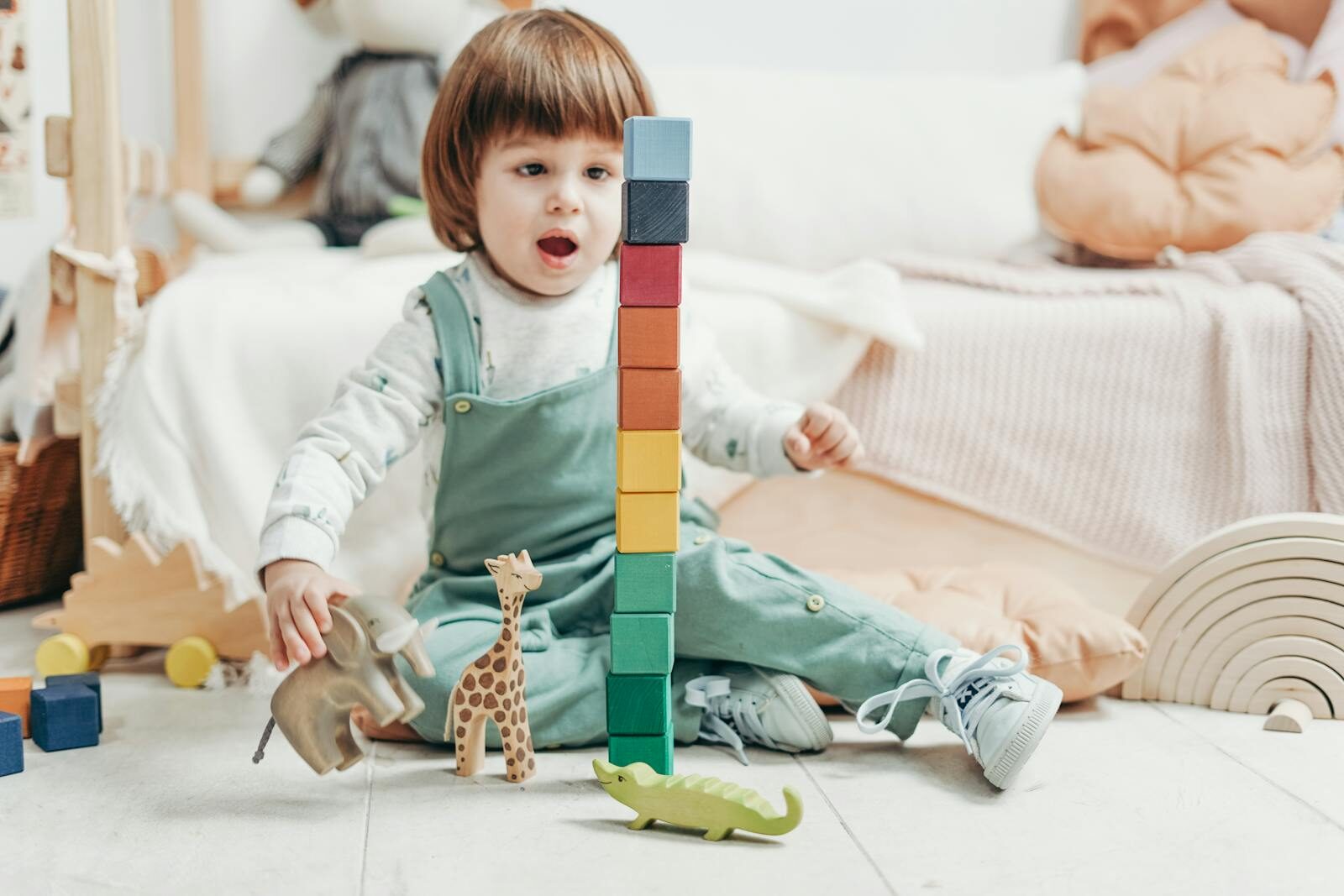
A Montessori playroom doesn’t need to be white, expensive, or free of all colour and joy. The principles behind it are actually quite pragmatic: give children access to materials they can use independently, organise the space so they can find things and put them away without help, and curate what’s available so that everything on offer is engaging and developmentally appropriate. That’s it. The aesthetics are up to you.
The Guiding Principles
Before you rearrange a single shelf, it helps to understand the why behind the Montessori approach to space. The prepared environment — as Montessori called it — is built on four core ideas:
- Freedom of movement — children can move through the space unimpeded, choose their own activity, and work wherever feels right to them
- Order — everything has a designated place, and that place is consistent; children can predict where things are and return them independently
- Beauty — the environment is aesthetically pleasing and cared for; beauty signals that the space is valued and invites the child to value it too
- Child-scale — furniture, storage, and materials are appropriately sized for the child using them
Choosing the Right Furniture
The furniture in a Montessori playroom should be low, open, and stable. You’re aiming for full visual access — when a child can see everything available to them at a glance, they can make genuine choices. Deep toy chests and closed cupboards hide what’s inside and lead to dumping behaviour (the child empties everything out just to find what they want).
What to include:
- Low open shelves (60–90cm tall) with clear organisation
- A small table and chairs at the correct height for your child — feet flat on the floor, elbows at table level when seated
- An art easel or dedicated art surface at standing height
- A soft rug or mat that defines the floor work area
- A small reading nook or cosy corner with cushions and books displayed face-out
Organising the Shelves
Montessori shelf organisation is less about categories and more about invitation. Each shelf space should feel considered — not stuffed full, but not pointlessly sparse. A general approach:
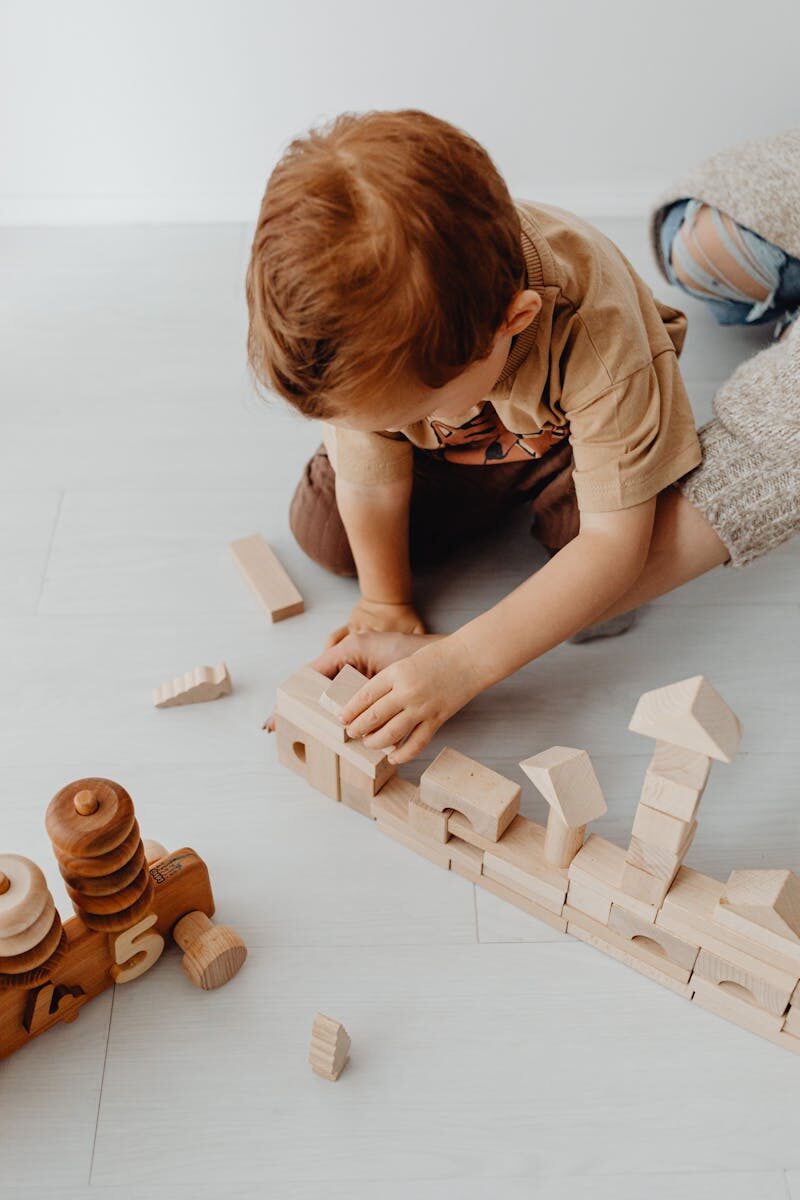
- Group by activity type, not by brand or material: puzzles together, building materials together, art supplies together, books in a dedicated reading area
- Use trays to group multi-piece activities — a tray signals “these things go together” and makes tidying intuitive
- Leave breathing room between items so each one is visually distinct and accessible
- Rotate regularly — a shelf that looks the same for months stops being interesting; a new arrangement or new item creates fresh curiosity

Creating Zones
Even a small playroom benefits from clearly defined zones. This isn’t about rigid boundaries — it’s about giving different types of play a natural home, which helps children transition between activities and understand where to set up and pack away.
Active Zone
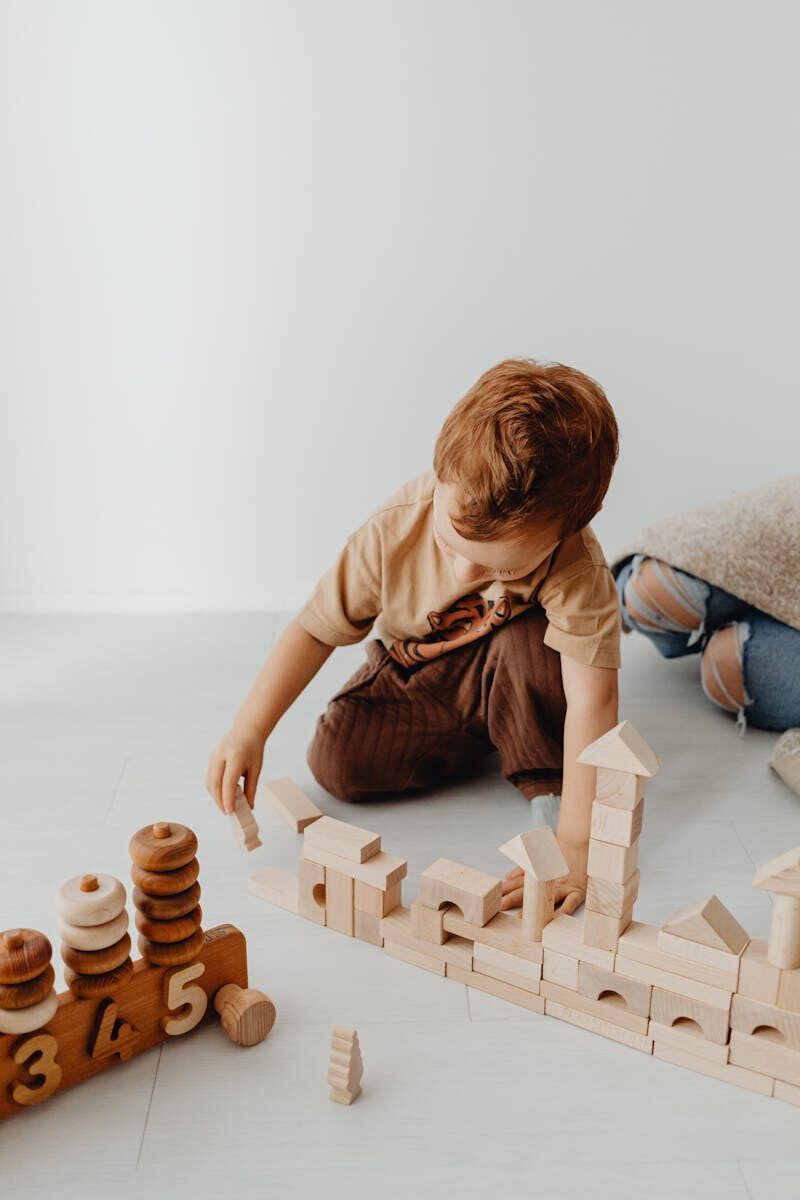
Open floor space for movement, construction, and large-scale play. Keep this clear of furniture. A balance board, climbing arch, or push toy lives here.
Quiet Zone
A reading nook or soft corner with cushions and books displayed face-out. Slightly separated from the main play area to allow for calm, focused attention.
Fine Motor Zone
Table and chairs for puzzles, drawing, threading, manipulative play. The table should be at the right height and well-lit — natural light is ideal.
Creative Zone
Art easel, accessible art supplies, and a washable floor or mat. Ideally near natural light and easy-to-clean surfaces. A child-height mirror nearby adds dimension to creative play.
The Most Important Thing
The most Montessori thing you can do in your playroom has nothing to do with furniture: step back, and let your child use the space. Resist the urge to direct, suggest, or intervene. The room exists to serve the child’s curiosity — your job is to set the stage, then get out of the way.
Explore our Montessori-friendly furniture range and storage solutions to build a playroom that truly works for your family.


 Elementor
