
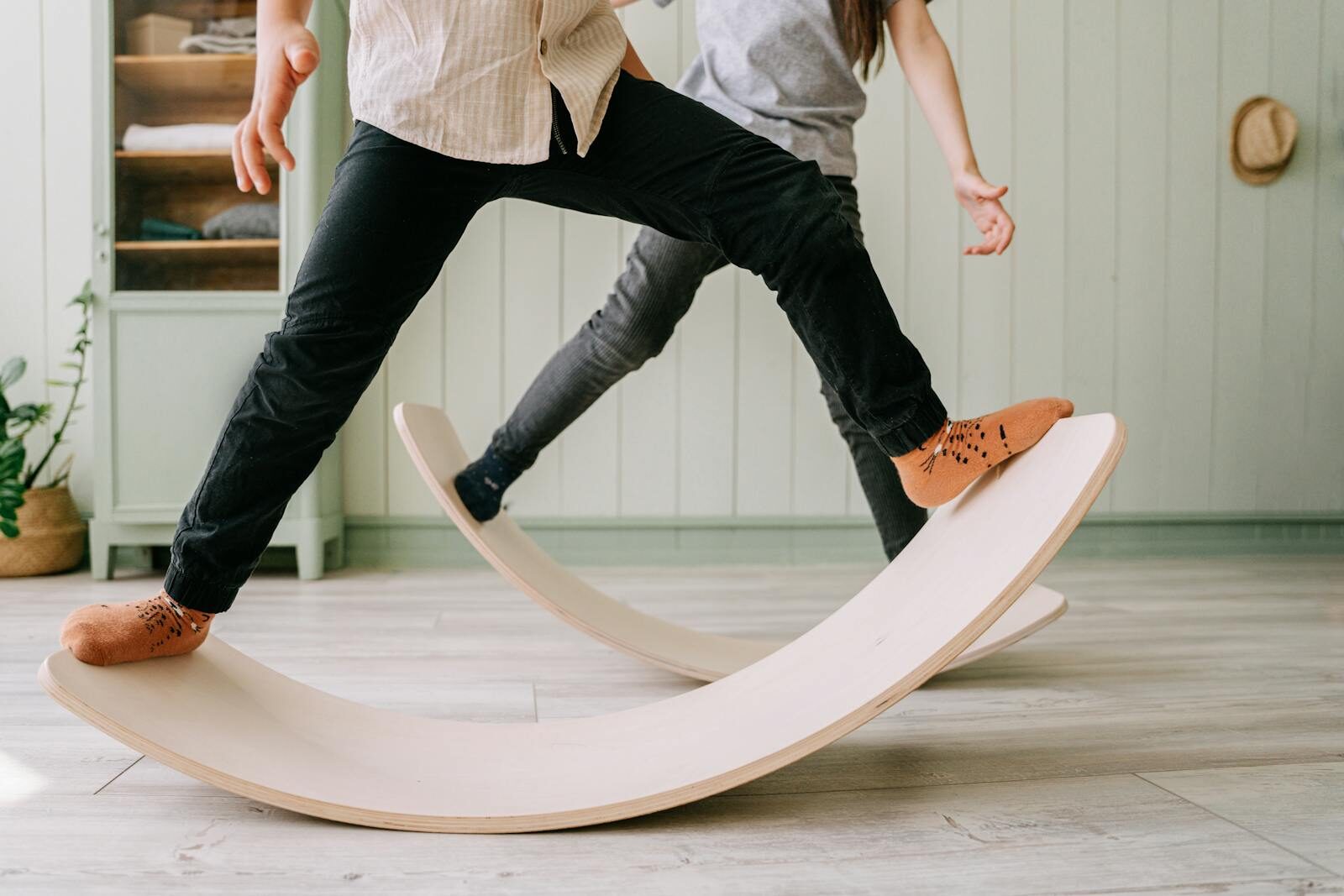
The most expensive toy in your child’s collection probably isn’t the one they play with most. Research on children’s play consistently finds that simple, open-ended objects generate longer, richer, more imaginative play than their feature-packed, battery-operated counterparts. And open-ended toys don’t just engage children now — they evolve alongside them, offering new possibilities as skills and imagination develop.
Here are ten open-ended toys worth investing in — classics with real staying power.
1. Wooden Unit Blocks
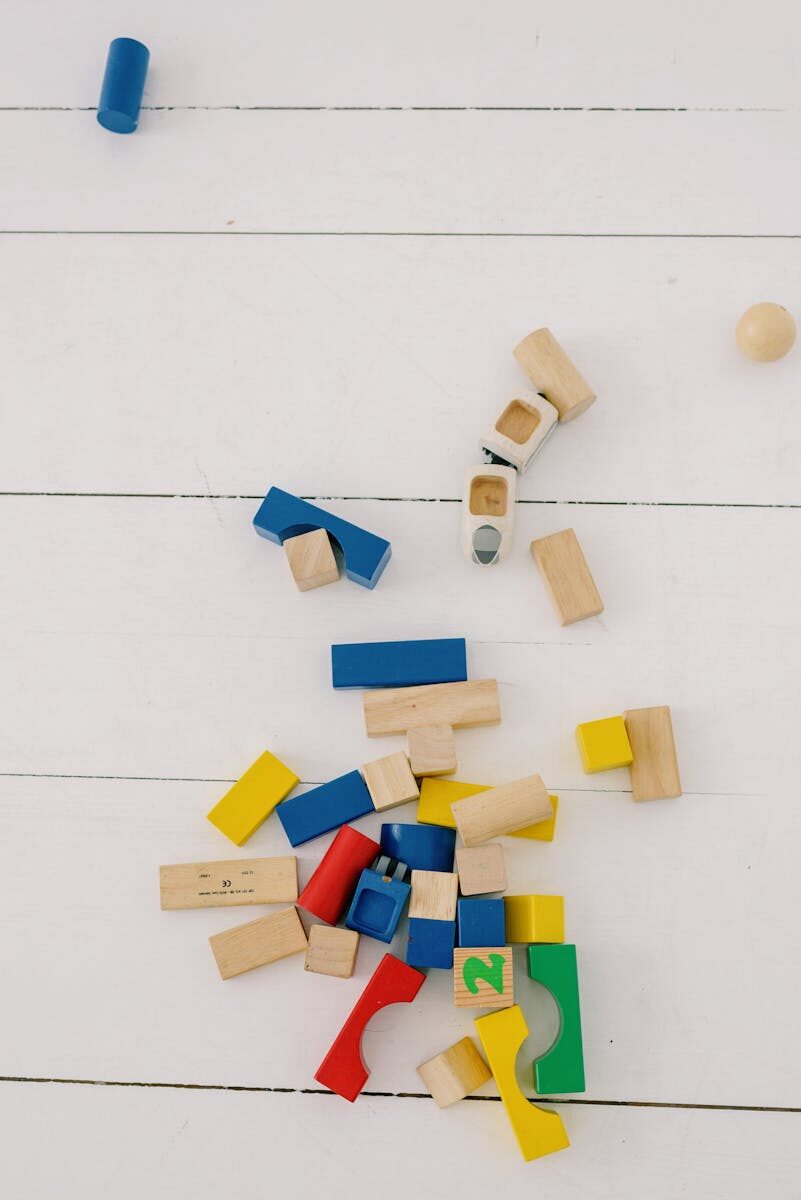
The gold standard of open-ended play. Unit blocks are sized in mathematical ratios — one half-unit, one unit, two units, four units — so they always fit together cleanly. A toddler stacks them; a four-year-old builds towers; a six-year-old constructs elaborate cities with roads, bridges, and architectural details. The same blocks. A decade of play.
2. Rainbow Stacker
Those arching rainbow-coloured pieces you’ve seen everywhere aren’t just beautiful — they’re remarkably versatile. Stack them in order, nest them upside down, balance them as bridges, line them up as a tunnel for small figures, use them as a colour-sorting game, arrange them as a cradle for a baby doll. The rainbow stacker looks equally at home displayed on a shelf as it does mid-play on the floor.
3. Loose Parts Collection
Loose parts play — popularised by architect Simon Nicholson’s 1972 theory — is simply giving children a collection of open-ended objects to manipulate, arrange, and combine freely. Natural loose parts (pebbles, shells, pinecones, seed pods) are free. Curated sets of wooden discs, glass gems, felt balls, and craft sticks aren’t expensive. The play value is extraordinary. This is the toy that requires no toy at all.
4. Play Silks
A set of lightweight, vibrantly coloured silk squares — small enough for a baby to grasp, large enough to become a cape, a river, a tent, a doll’s blanket, or a market stall. Play silks are lightweight, washable, and last indefinitely. They’re one of the few toys that genuinely get more use, not less, as children grow older and their imaginative play becomes more complex.
5. A Quality Balance Board
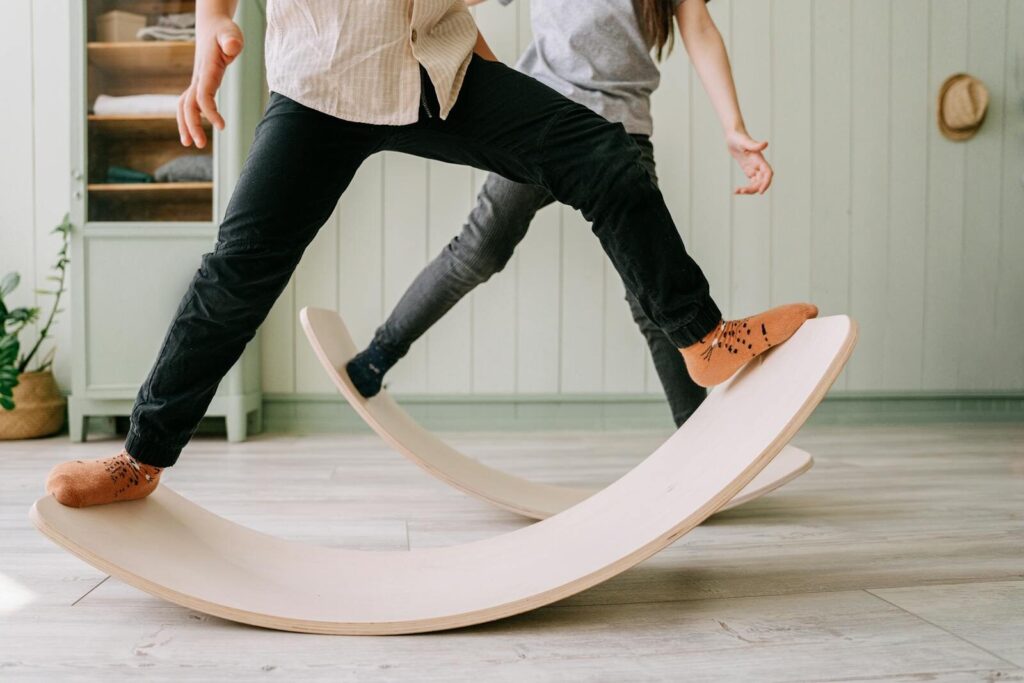
A wooden balance board (also called a rocker board or Wobbel board) is a physical toy with an open-ended nature that surprises many parents. Yes, children balance and rock on it — but they also use it as a ramp for toy cars, a bridge in block constructions, a sled, a boat, a stage. The proprioceptive feedback it provides is genuinely developmental. It’s also, for reasons that remain mysterious, the toy that every child who visits will immediately and instinctively want to use.
6. Wooden Animal Figures
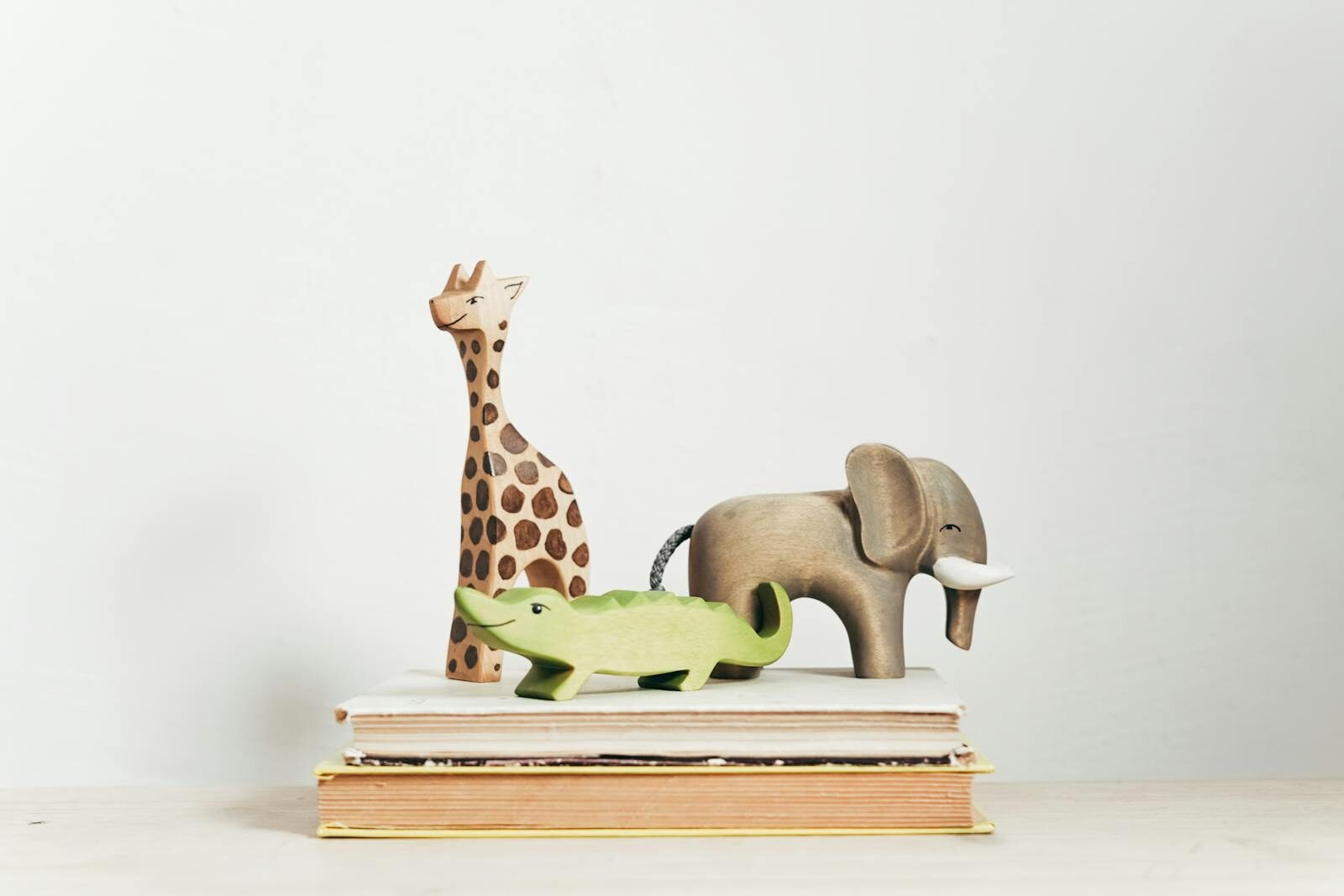
Small-scale, realistic wooden or hand-painted animal figures are among the most enduring toys ever made. Farm animals for toddlers become the fauna of elaborate small-world scenes at age four, and the basis of nature study collections at age seven. Look for figures with accurate anatomical detail and a weight and texture that feels satisfying in a small hand — the difference between a cheap plastic set and a quality wooden one is tangible.
7. A Play Kitchen or Mud Kitchen
Domestic role play — cooking, shopping, serving, cleaning — is among the most universally and persistently beloved play of early childhood. A quality play kitchen, used first for simple imaginative play, becomes a space for hosting elaborate dinner parties for stuffed animals, conducting “science experiments,” and rehearsing every domestic scene a child observes in your home. An outdoor mud kitchen extends the same play into the messy, sensory-rich natural world.
8. Open-Ended Art Supplies
Not kits with prescribed outcomes — open art materials. Good quality beeswax crayons, watercolour paints, clay, and blank paper are developmental tools that engage children from toddlerhood through adolescence (and beyond). The investment in quality materials pays off: good watercolours behave in a way that cheap ones don’t, teaching children how paint actually works.
9. Stacking and Sorting Sets
Classic stacking cups, nesting bowls, and sorting shapes evolve from grasping and mouthing toys for babies into mathematical manipulatives for preschoolers into measurement tools (sand, water, ingredients) for older children. The same simple set of ten graduated cups can provide years of relevant, self-directed exploration.
10. A Well-Made Dollhouse or Small World
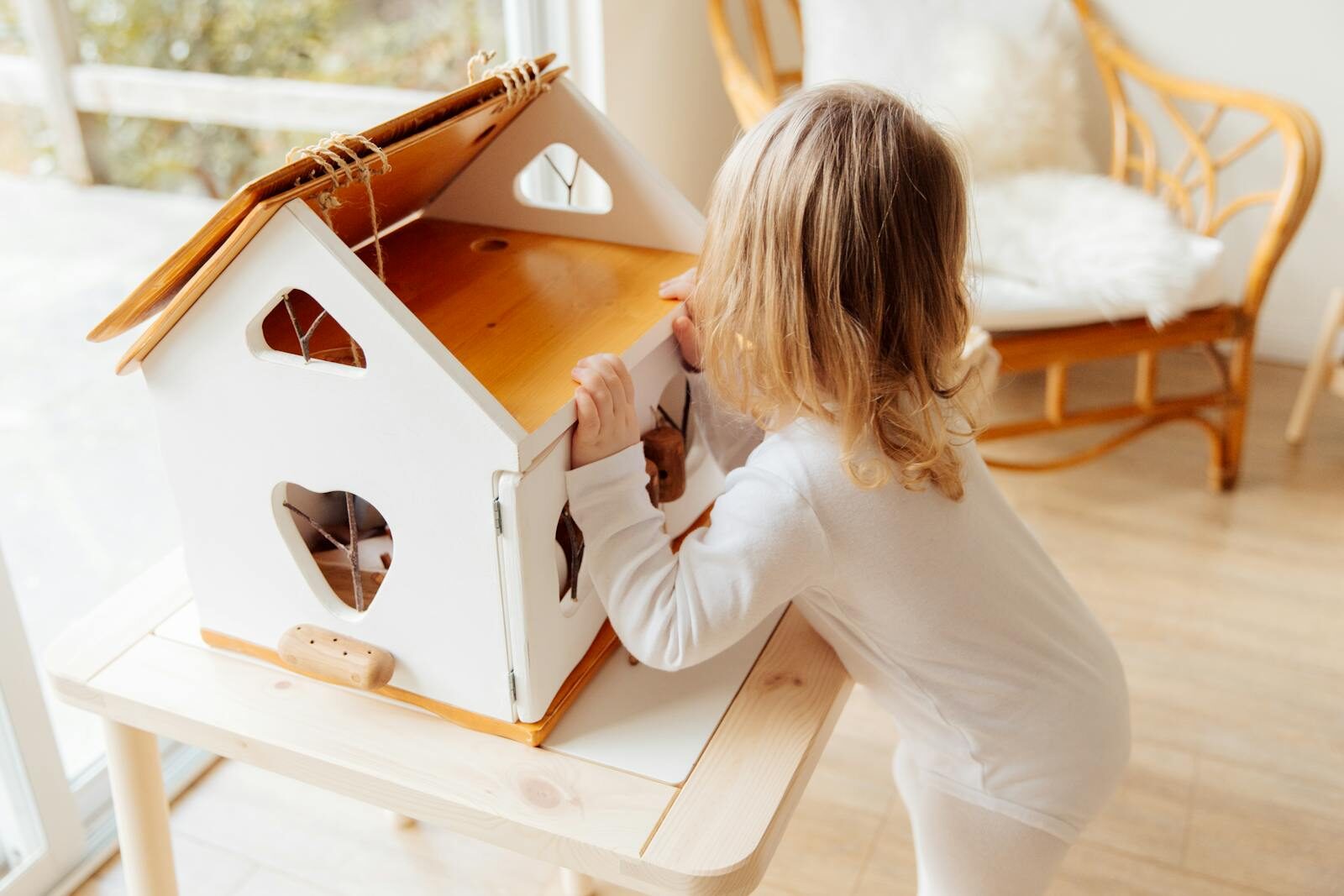
A dollhouse is a theatre for a child’s inner world. It’s where they process what they observe, rehearse what they’re anxious about, and work through social dynamics in a safe, miniature form. A quality wooden dollhouse — simply furnished, with room to rearrange — will be played with daily from age three to ten, and treasured long after that. Choose one sized appropriately for the small figures you already have.
The best toy is the one that does the least — so your child’s imagination can do the most.
Explore our full collection of open-ended toys, curated for longevity, developmental value, and — because it matters — beauty.


 Elementor
