
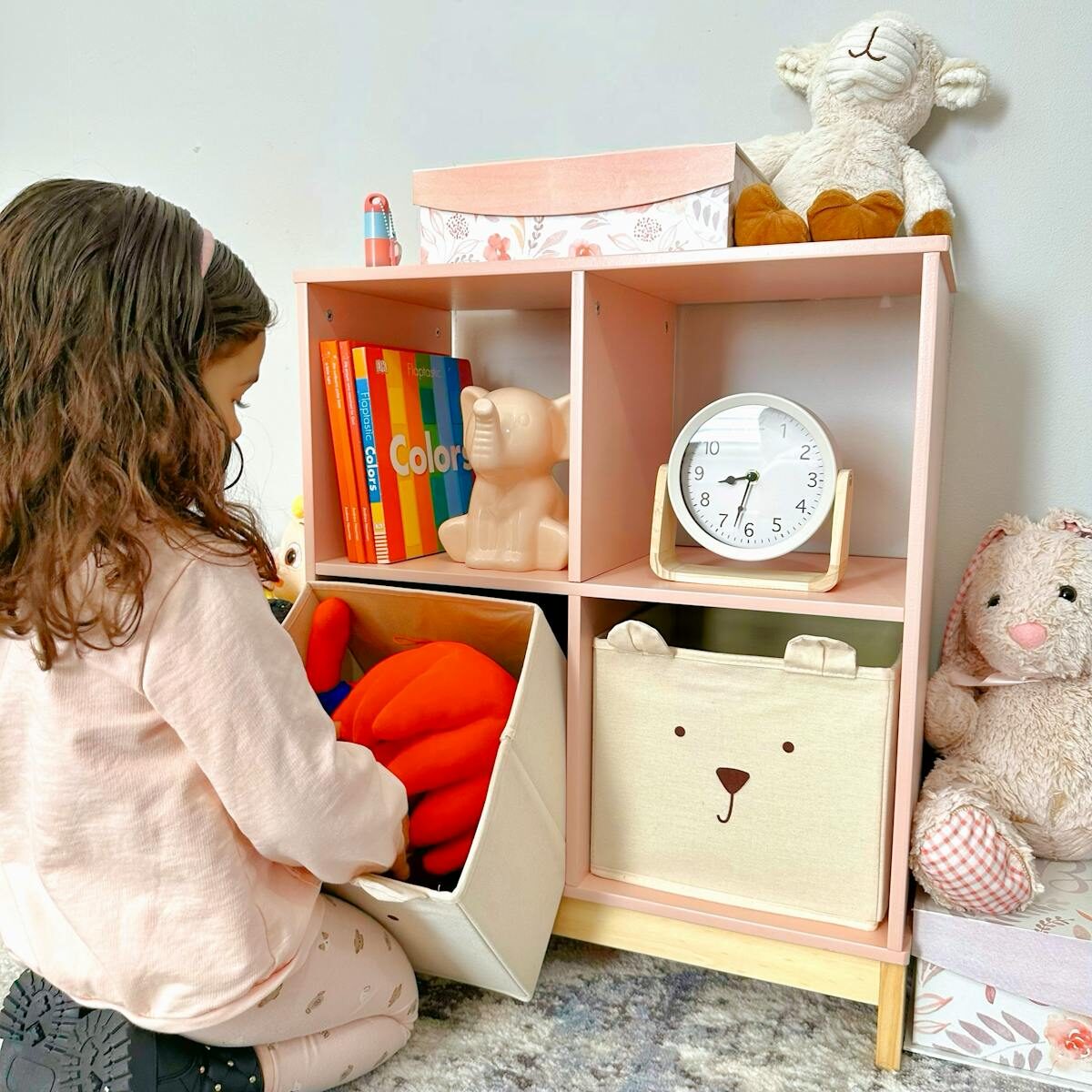
Australian homes are getting smaller. The average floor area of new houses has been declining steadily for a decade, and children’s bedrooms are often the first to be compromised. But a small room doesn’t have to mean a chaotic one. With a strategic approach to storage, even the most compact space can feel ordered, calm, and genuinely functional — for both child and parent.
Start With a Declutter, Not a Shopping Trip
Before you buy a single storage solution, edit what you have. Research consistently shows that children play better — and longer — with less. A room containing 150 toys doesn’t give a child 150 opportunities for play; it gives them decision fatigue and overwhelm. Pare back to what’s actually used and loved, and you’ll likely find the storage problem is already half-solved.
A good rule of thumb: if it hasn’t been played with in three months, it goes into a rotation box or leaves the house entirely. Children rarely notice, and the room will thank you for it.
Think Vertically
In a small room, floor space is precious. The walls, however, are largely untapped. Floating shelves, wall-mounted book ledges, pegboards, and hooks all move storage off the floor without compromising the sense of space.
The key is maintaining a balance between what’s accessible to children (lower shelves, floor-level baskets) and what’s stored out of reach (upper shelves for rotated toys, art supplies, seasonal items). This creates a natural hierarchy that helps children understand what’s theirs to access and what’s not.
The Best Storage Pieces for Small Kids’ Rooms
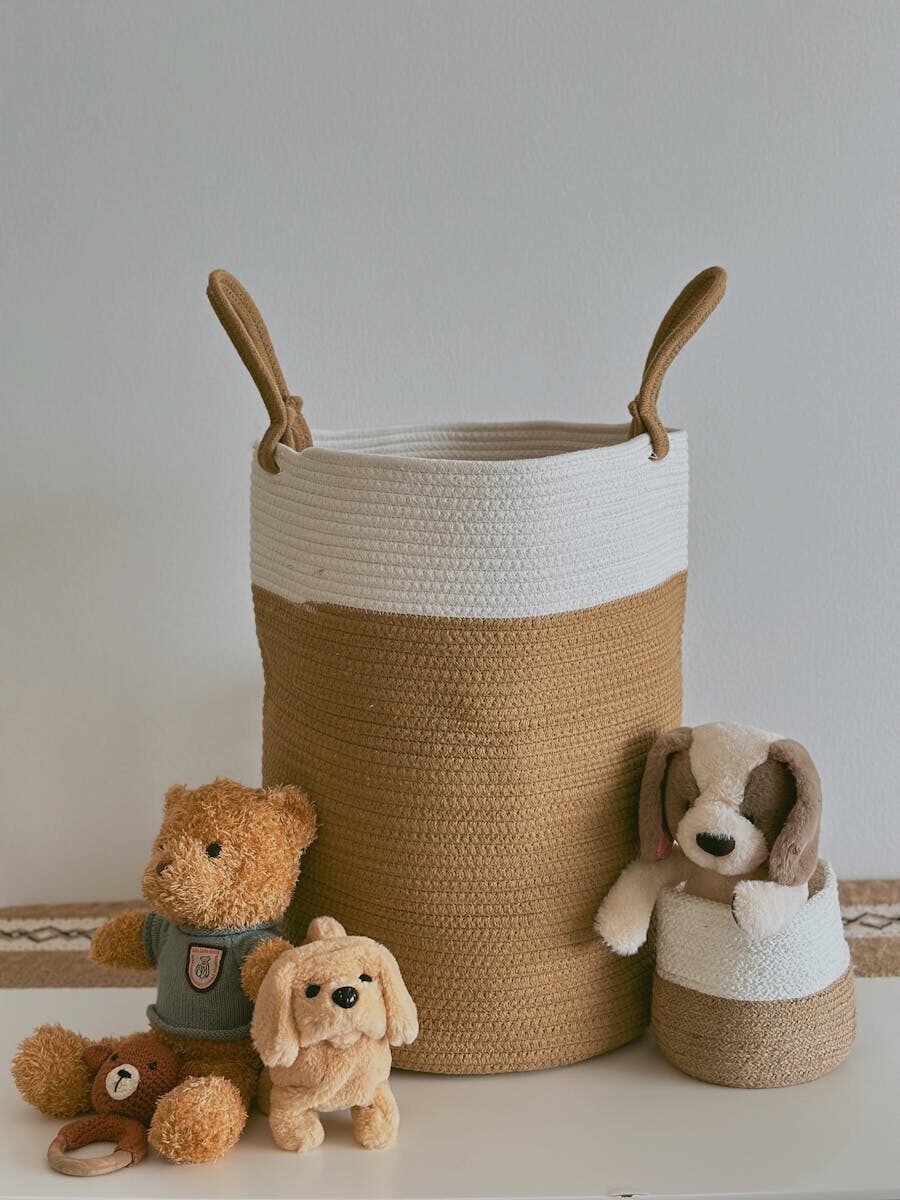
Woven Baskets
A set of woven baskets in varying sizes is one of the most versatile storage investments you can make. They work on shelves, under beds, at floor level, and in wardrobes. Unlike rigid plastic bins, they’re visually warm, they don’t clash with any aesthetic, and they can move through different rooms and functions as your child grows. Look for seagrass or cotton rope constructions — they’re durable, washable, and genuinely beautiful.
Low Open Shelving
A low bookshelf — 60–80cm tall — serves double duty: it stores books and toys, and it creates a natural room divider that doesn’t visually close off the space. In a shared room, it can define two zones without a wall. Keep the top surface clear and you have display space for artwork, plants, or a small lamp.
Under-Bed Storage
Bed frames with integrated drawers are excellent in small rooms, but they’re not always possible (or budget-friendly). Flat, lidded storage boxes on wheels work just as well under most standard beds. Use these for seasonal clothing, extra bedding, or the rotation toy collection — things that need to be accessible but not every day.
A Single, Well-Chosen Wardrobe
Rather than multiple pieces of furniture competing for floor space, invest in one well-configured wardrobe that handles everything: hanging clothes, folded items, shoes, and a shelf or two for out-of-rotation toys. A wardrobe with a mix of hanging space and shelves — rather than all hanging — is far more useful for a child’s wardrobe, which is predominantly folded items.
The Calm Room Principle
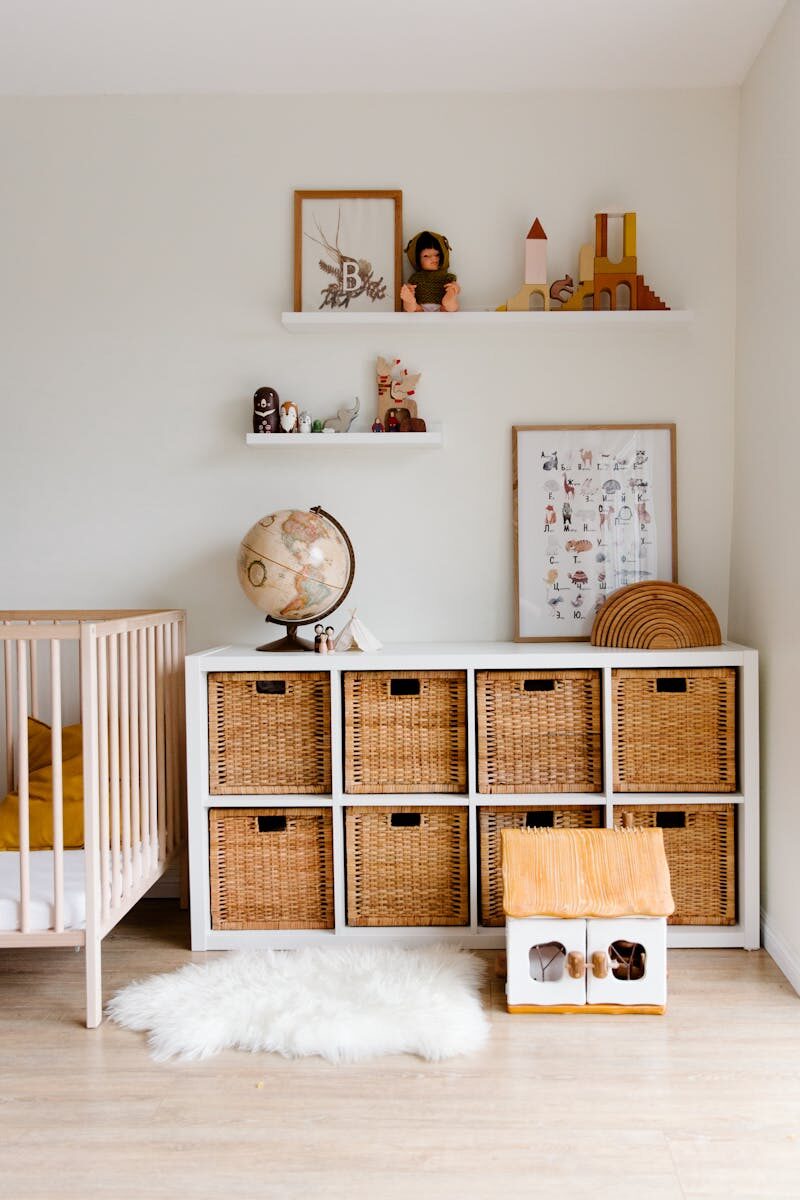
The goal of storage isn’t just to hide things — it’s to create an environment where your child can find what they need, return it when they’re done, and feel genuinely at ease in their space. That requires storage that’s sized for them, accessible to them, and simple enough to actually maintain.
When children know where things live, they can tidy up independently. When they can reach their own belongings, they don’t need you to get things for them. Storage, done well, is one of the most powerful tools for building a child’s independence and your own sanity.
Browse our full range of storage solutions — designed to be as beautiful as they are functional, in sizes that actually fit children’s spaces.


 Elementor
