
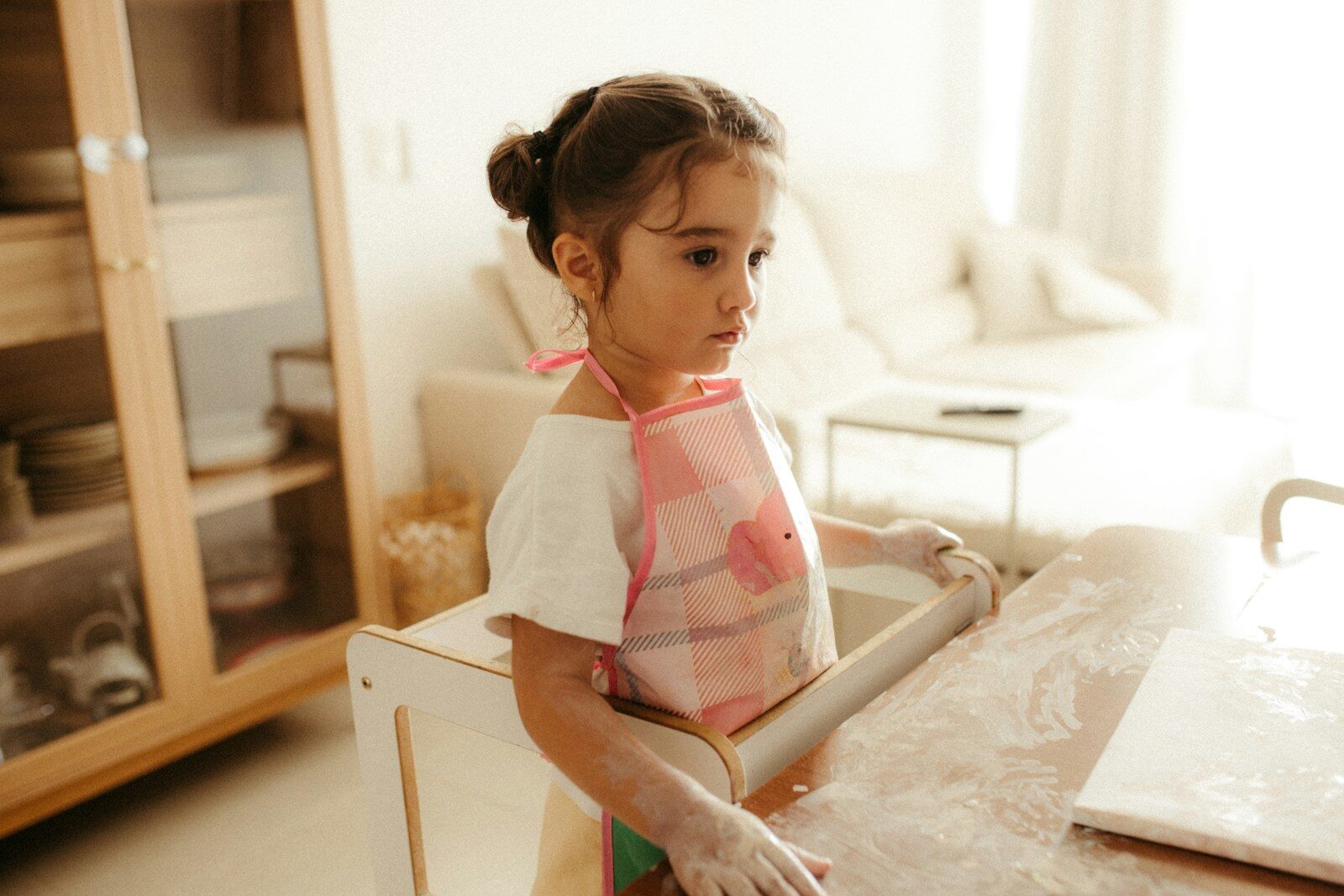
If you’ve ever spent time in a kitchen with a toddler tugging at your leg, you already understand the problem a learning tower solves. Children want to be where the action is — and in most homes, the action is at bench height. A learning tower brings them safely up to that level, turning a source of frustration into an opportunity for connection, learning, and genuine participation in family life.
But not all learning towers are created equal. Here’s what to look for when choosing one.
What Is a Learning Tower?
A learning tower (also called a kitchen helper, toddler tower, or Montessori tower) is an enclosed, elevated platform that allows young children to stand safely at counter height. Unlike a step stool — which a child can easily tumble off — a learning tower has four sides (or at least a back and rails) so the child is enclosed and secure while still having their hands completely free to work.
The design is rooted in Montessori philosophy: give children access to real, meaningful activities rather than toy simulations of them. When a child helps wash vegetables, knead dough, or pour their own cereal, they’re not just “helping” — they’re building fine motor skills, developing mathematical concepts, learning sequencing and patience, and building confidence in their own capabilities.
What Age Can Children Use a Learning Tower?
Most children are ready to use a learning tower from around 18 months to 2 years — when they’re walking confidently and interested in what’s happening at adult level. With proper supervision, some families start even earlier.
A well-made, height-adjustable tower can grow with your child well into primary school age. The older child doesn’t need the platform raised as high — they use it to reach the top shelves of a bookcase, work at an art table, or assist at the bathroom sink. Look for towers with adjustable platform heights to maximise longevity.
Key Features to Look For
Stability and Weight Rating
This is non-negotiable. A learning tower must be completely stable when a child shifts their weight, leans, or (inevitably) bounces. Look for a wide base footprint and a weight rating of at least 50kg — children grow faster than you expect, and you want a tower that will last.
Adjustable Platform Height
A fixed-height platform is fine for a narrow age range but significantly limits the tower’s longevity. Adjustable platforms typically offer 3–5 height settings, allowing you to lower the platform for younger children (so they have more of their body above the rail) and raise it as they grow taller.
Rail Design
Three-sided enclosure (back and two sides) is the most common configuration. Some towers are fully enclosed on four sides with a step-in front opening. The four-sided design is more secure for younger or more adventurous children; the three-sided design offers slightly more freedom of movement for older children.
Material and Finish
Given that children will mouth, lick, and put their faces against every surface, the material and finish matter greatly. Choose solid timber over MDF or particleboard, and look for non-toxic, water-based finishes. Our Birch Learning Tower uses FSC-certified birch plywood with a non-toxic water-based finish — safe for the closest contact and built to withstand years of daily kitchen use.
Ease of Cleaning
Kitchens are messy. Toddlers are messier. The tower will encounter flour, egg, tomato sauce, paint, and every other substance your child encounters. Choose a finish that wipes clean easily — smooth, sealed timber is far easier to maintain than raw wood or fabric-upholstered surfaces.
Beyond the Kitchen
Don’t limit your thinking to cooking. Learning towers are equally useful at the bathroom sink (hand washing, teeth brushing, face washing — all independently), at an art table, in the garden at a potting bench, or anywhere else your child wants access to a surface that’s just slightly out of reach.
One tower, thoughtfully chosen, will move through rooms and years with remarkable usefulness. It’s one of those rare purchases that pays for itself — in developmental benefits, in kitchen peace, and in moments of real connection that happen when children work alongside rather than apart from the adults they love.


 Elementor
