
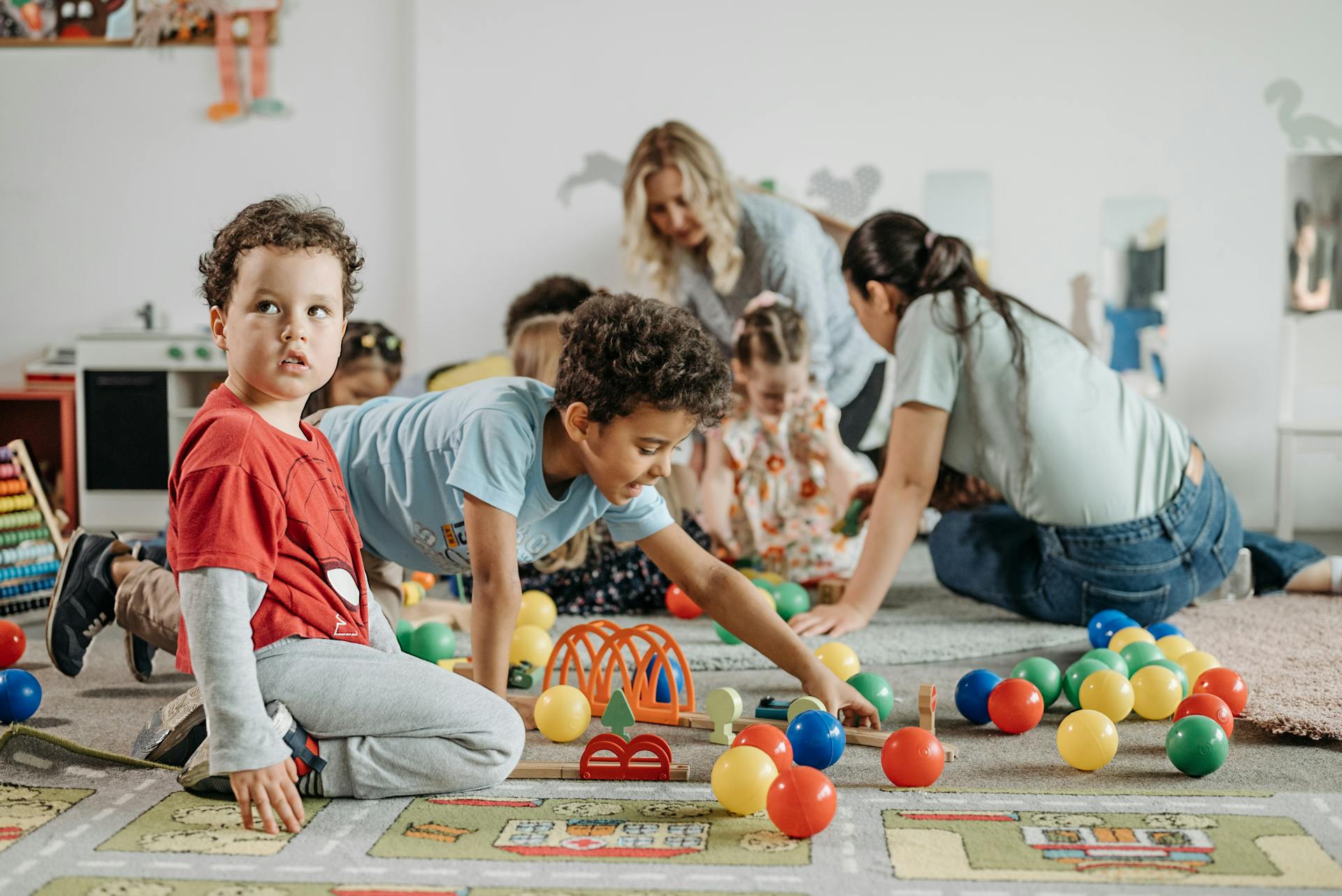
The word “Montessori” can feel intimidating — and expensive. Curated Instagram feeds filled with perfectly styled, all-natural playrooms don’t help. But the philosophy at the heart of the Montessori method has nothing to do with aesthetic perfection or a high price tag. It’s about giving children access, independence, and an environment that respects their capabilities. You can do all of that without a full home renovation.
Here are five practical ways to bring Montessori principles into your home — on any budget.
1. Lower Everything to Their Level
The single most impactful shift you can make costs nothing at all: move things down. Hang hooks at your child’s height. Place books spine-out on the bottom shelf of an existing bookcase. Put a small step stool at the bathroom sink. Swap a high toy chest for a low open shelf where children can see and reach everything independently.
When a child can access their own belongings without asking for help, it builds confidence and reduces frustration for everyone. Maria Montessori called this the prepared environment — a space intentionally arranged to support the child’s independence, not the adult’s convenience.
“The greatest gifts we can give our children are the roots of responsibility and the wings of independence.”
— Maria Montessori
2. Rotate Toys Instead of Buying More
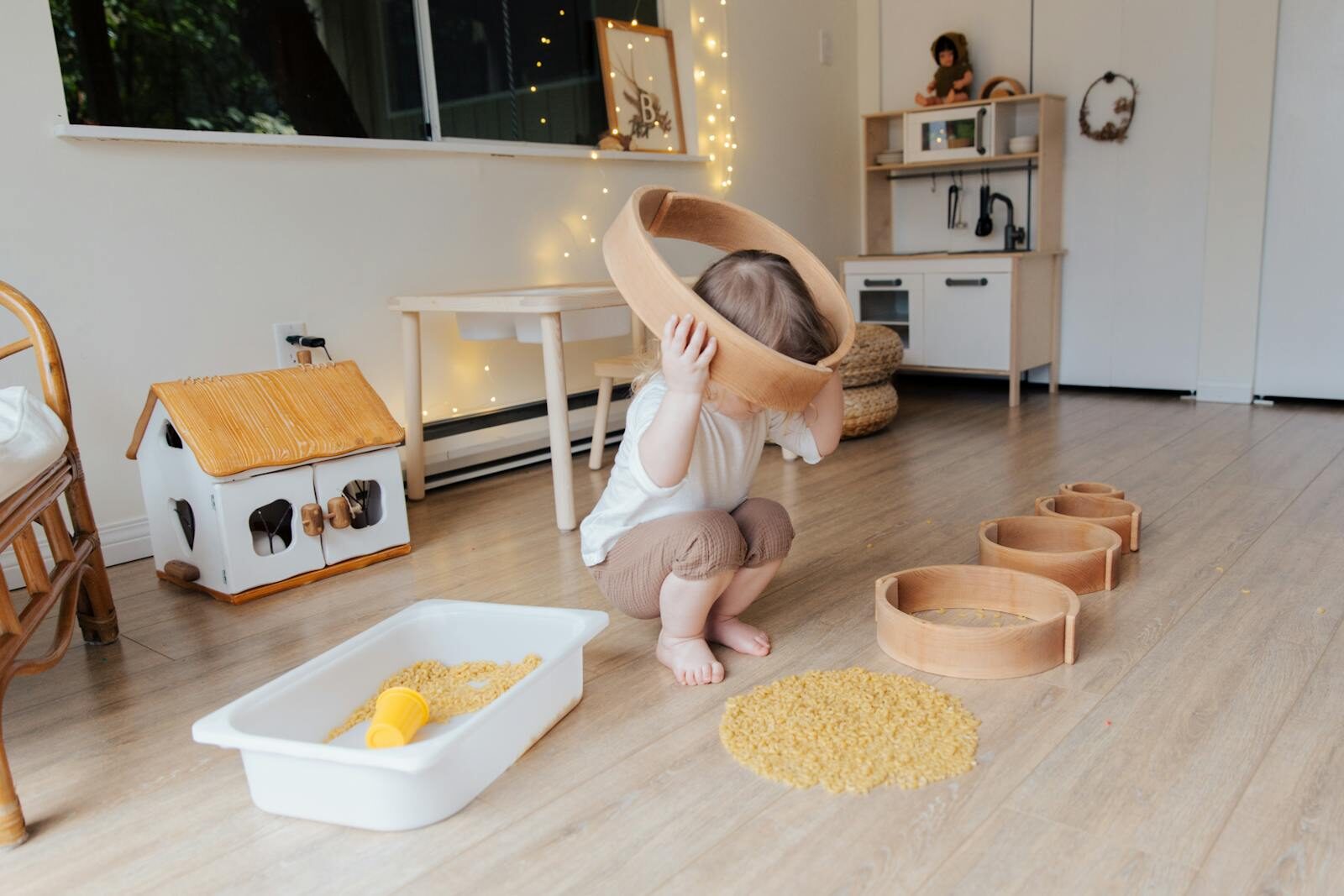
One of the least understood Montessori principles is the concept of toy rotation. Rather than keeping every toy available at once, you put most toys away and rotate a small selection every few weeks. The result? Children engage more deeply, play longer, and rediscover toys they’d grown bored with.
You don’t need to buy a single new thing to implement this. Go through what you already have, box up half of it, and see what happens. Most parents are surprised by how much richer the play becomes when there’s less visual noise competing for attention.
- Keep 6–10 items accessible at a time for toddlers
- Store rotated toys in labelled boxes in a wardrobe or storage room
- Rotate every 2–4 weeks, or when you notice engagement dropping
- Let older children participate in choosing what comes out next
3. Create a Child-Sized Kitchen Space
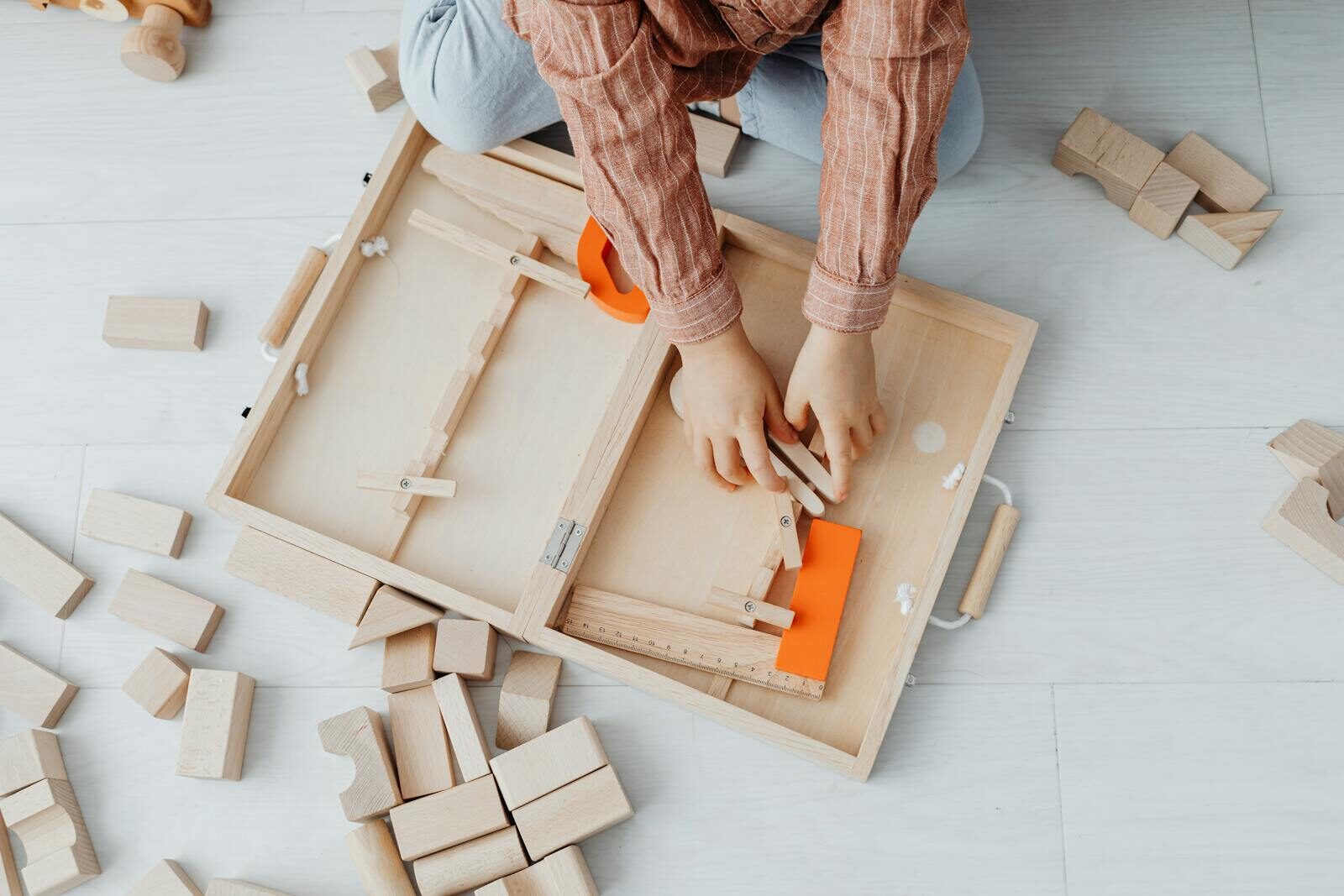
Montessori homes involve children in real, practical life — cooking, cleaning, watering plants, setting the table. You don’t need a play kitchen to make this happen (though they are wonderful). You need a small stool, a low drawer with child-safe utensils, and a willingness to let things take a little longer.
A learning tower brings children safely to bench height so they can wash vegetables, mix ingredients, and participate in meal prep alongside you. It’s one of the highest-value Montessori investments you can make — children who cook develop fine motor skills, maths concepts, patience, and a genuine love of food.
4. Choose Open-Ended Over Battery-Operated
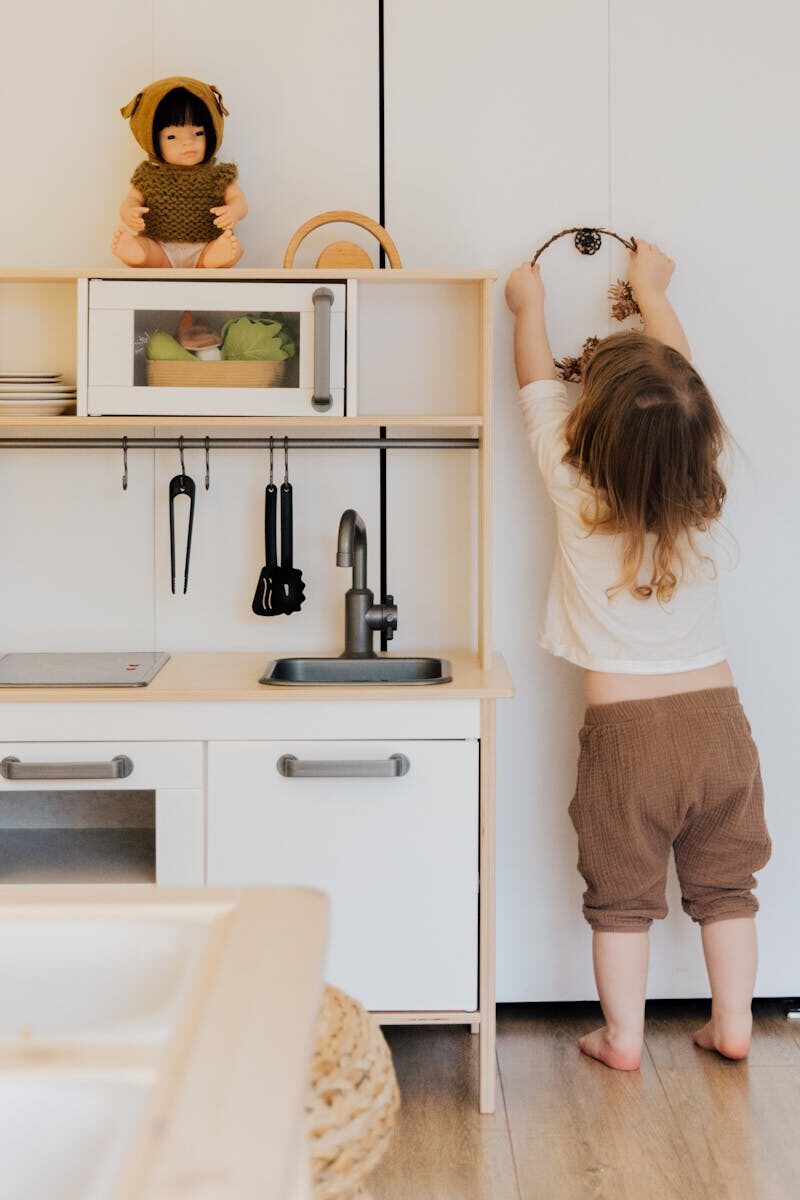
The Montessori approach to toys is simple: the toy should do less so the child can do more. A set of wooden blocks doesn’t beep, flash, or tell a child what to do — it just sits there, full of possibility. That open-endedness is precisely the point. The child’s imagination does the work, and that work is exactly the kind of deep, focused play that builds cognitive skills.
When shopping, ask yourself: Does this toy have one purpose, or a hundred? A rainbow stacker can be a bridge, a tunnel, a nest for toy animals, a colour-sorting exercise, or simply a beautiful object to arrange and rearrange. A toy that sings one song when you press a button has nowhere near that kind of developmental range.
5. Simplify the Bedroom
A Montessori bedroom doesn’t need to be minimal to the point of bareness — it just needs to be calm, ordered, and accessible. A few key changes make a big difference:
- A floor bed or low bed frame allows children to get in and out independently from an early age
- A small wardrobe with visible clothing choices supports morning independence and decision-making
- A low bookshelf with a rotating selection of 5–8 books invites reading without overwhelm
- Natural light and minimal decoration at the child’s eye level creates calm rather than visual noise
Start Small, Stay Consistent
The most important thing about bringing Montessori principles into your home isn’t the furniture or the toys — it’s the mindset. Ask yourself regularly: Can my child do this themselves? If the answer is yes, step back and let them. That shift in perspective will do more for your child’s development than any product you could buy.
That said, when you are ready to invest in pieces that support independent play and real-life participation, we believe quality materials make a genuine difference. Explore our range of Montessori-inspired toys and child-sized furniture — all made to grow with your family for years to come.


 Elementor
